How 5G is Revolutionizing Smart Cities
14 February 2026
Let’s face it—our cities are getting smarter by the day. From intelligent traffic systems to app-based public transport, the way we experience urban life is moving from concrete to code. But guess what’s the real secret sauce behind this futuristic evolution? You guessed it: 5G.
Yes, that same buzzword people throw around when talking about faster phones and streaming HD movies without buffering. But 5G isn’t just about quicker downloads—it’s the backbone of smart cities. It's turning our old, clunky urban infrastructure into something out of a sci-fi movie. So, buckle up as we dive into how 5G is revolutionizing smart cities—and why it’s way cooler than you might think.
What Exactly Is a Smart City, Anyway?
Before we jump into the 5G magic, let’s make sure we’re on the same page with the whole smart city thing.A smart city uses connected technology to optimize services, reduce waste, improve transportation, and even make your morning commute a little less miserable. Think Wi-Fi-enabled streetlights, sensor-loaded trash bins that tell you when they’re full, and traffic lights that adjust in real time to keep cars flowing.
It’s like giving your city a brain—and lots of eyes and ears to match.
5G: The Engine That Powers the Smart City Dream
Okay, here’s where it gets spicy. 5G is the fifth generation of mobile networks, and it’s not just a minor leap forward. It’s a full-blown quantum leap. We’re talking:- Speeds up to 100x faster than 4G
- Ultra-low latency (a.k.a. almost no delay)
- Ability to connect a bazillion devices at once (not the technical term, but you get it)
So why does this matter? Because the smart city is all about devices talking to one another—fast, reliably, and constantly. And 5G makes that possible.
Real-Time Communication: No More Waiting Around
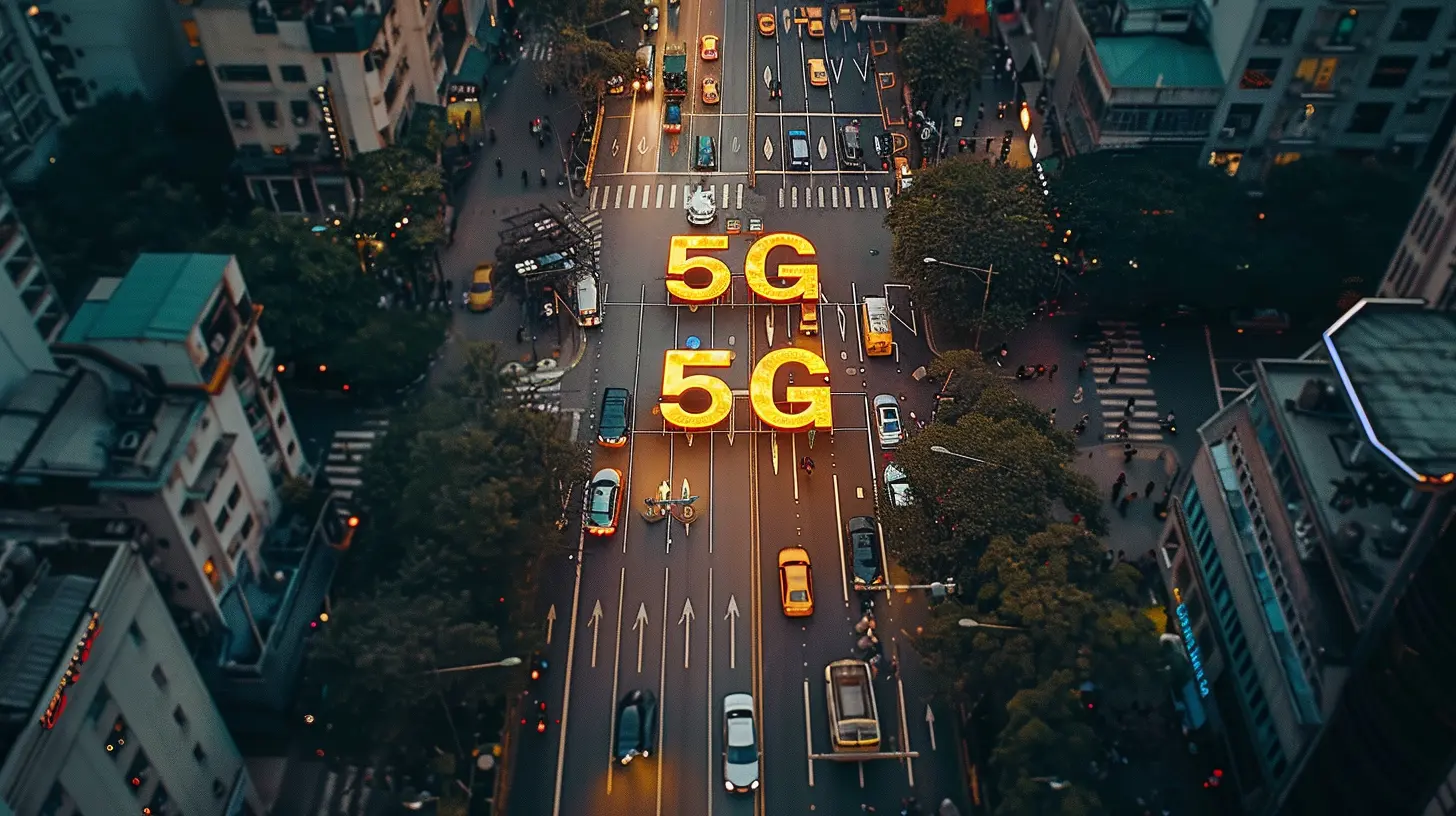
Let’s take traffic management as an example. Right now, traffic lights might run on timers, or maybe some use sensors to detect movement. But what if every vehicle, pedestrian, and traffic signal could chat in real time? That’s the goal with 5G.The ultra-low latency of 5G means that information is shared almost instantly. So, if there’s an accident up the road, emergency services can be dispatched immediately and traffic rerouted in seconds—not minutes.
It’s like turning your city into one huge, super-responsive organism.
Autonomous Vehicles: Finally Getting the Green Light
Self-driving cars are cool in theory but terrifying without reliable communication. Picture this: A car cruising down the street suddenly needs to make a split-second decision to avoid a cyclist. With 4G, the lag could be deadly. With 5G, that decision happens in milliseconds.And it’s not just cars. Think delivery drones, autonomous buses, and even robo-taxis—all working together and “talking” to traffic systems, pedestrians’ smartphones, and each other. It’s the stuff of science fiction finally coming to life.
Smarter Energy Grids (And Lower Utility Bills, Hopefully)
One of the less flashy—but super important—parts of a smart city is energy. 5G allows real-time monitoring and adjustment of energy usage across homes, businesses, and city infrastructure.Imagine your smart meter chatting with the power grid and automatically adjusting usage based on demand, weather, and time of day. That means smoother energy distribution, fewer blackouts, and more efficient use of renewable energy. Plus, maybe your electricity bill won’t make you cry anymore.
Public Safety on Steroids
Next up: safety. With 5G, law enforcement and emergency services can respond faster and more efficiently. High-res surveillance cameras, facial recognition, gunshot detection systems—they can all function better with faster, more reliable data transfer.And in case of natural disasters? Sensors can give early warnings, and rescue drones can be deployed instantly to assess damage or deliver aid.
Call it Big Brother or call it peace of mind. Either way, it's happening.
Environmental Monitoring: Because Clean Air Matters
If you’ve ever walked through a polluted city breathing like a fish out of water, you’ll appreciate this one. 5G enables thousands of environmental sensors to monitor air quality, water levels, temperature, and even noise pollution in real time.This info can be used to make immediate decisions—like diverting traffic from polluted areas, alerting residents to poor air conditions, or tracking water usage before a drought becomes critical.
It’s like giving Mother Nature a direct line to City Hall.
Smarter Infrastructure Maintenance
You know those potholes that never seem to get fixed? Imagine if roadways could self-report damage, or a bridge could signal when it’s structurally compromised—before it collapses. That’s the power of 5G-enabled sensors embedded in city infrastructure.They keep a constant pulse on the health of buildings, roads, tunnels, and more. That means timely maintenance, fewer accidents, and less disruption.
It’s like your city got a Fitbit—and it actually listens to it.
Better Public Transport (Yes, That Includes Trains That Run on Time)
Public transport is a huge part of urban life. With 5G, buses, trains, and metro systems can be tracked in real time, allowing for smarter route planning and dynamic scheduling.Need to catch a train? A 5G-connected app can tell you exactly where it is, how crowded it is, and recommend an alternate route if there’s a delay. It’s like having your own personal urban travel assistant.
Boosting the Local Economy: Tech = Jobs + Innovation
A smart city powered by 5G attracts startups, innovators, and tech investments like bees to honey. Think about it: Who wouldn’t want to build and test smart gadgets in a city that talks back?This tech ecosystem creates jobs, encourages entrepreneurship, and can even boost tourism. People love to experience the “city of tomorrow”—especially when it comes with great Wi-Fi.
Enhanced Citizen Engagement
Let’s not forget the people—because technology is only as good as the way it impacts lives.Through 5G, cities can create ultra-responsive platforms for citizen feedback, service requests, and community engagement. Whether it's reporting a pothole or joining a virtual town hall, 5G makes it all seamless and interactive.
You have a louder voice in how your city runs.
Real-World Examples of 5G-Driven Smart Cities
Still think all this sounds too futuristic? Let’s talk about some real examples:Seoul, South Korea
One of the pioneers of 5G, Seoul uses it for traffic optimization, smart streetlights, and real-time crime detection. They’re even testing autonomous buses and robot patrols.Barcelona, Spain
Barcelona has embraced 5G with smart parking, waste management, and environmental monitoring. The result? Cleaner streets, happier residents, and reduced emissions.Singapore
Singapore is basically the poster child for smart cities. From traffic flow to water conservation, 5G is helping the city-state stay ahead of the curve—and it’s doing it with style.The Challenges We Need to Tackle (Because It’s Not All Rainbows)
Okay, time for a reality check. Rolling out 5G and smart tech isn’t a walk in the park. There are hurdles:- Infrastructure Costs: Installing 5G towers everywhere isn’t cheap.
- Privacy Concerns: More data = more chances for data to get misused.
- Digital Divide: Not everyone has equal access to tech, and smart cities can unintentionally widen that gap.
- Cybersecurity Risks: More connected devices mean more entry points for hackers.
The good news? These challenges aren’t impossible. With the right policies, funding, and focus on equity, cities can navigate these speed bumps just fine.
What’s Next? The Road Ahead for Smart Cities and 5G
We’re only scratching the surface of what’s possible. As 5G continues to roll out and mature, the integration with other technologies—like AI, edge computing, and the Internet of Things (IoT)—will take cities to the next level.Imagine homes that manage themselves, roads that heal when cracked, and public spaces that adapt dynamically based on who’s present and what they need. That’s not just a pipe dream—it’s our future, and it’s coming faster than you think.
Final Thoughts
So, is 5G revolutionizing smart cities? You bet it is.It's not just about speed or convenience—it's about redefining how we interact with the places we live. From real-time traffic updates to life-saving emergency responses, 5G is setting the stage for cities that are more efficient, sustainable, and in tune with our needs.
And the best part? We're just getting started.
all images in this post were generated using AI tools
Category:
5g TechnologyAuthor:

Reese McQuillan
Discussion
rate this article
2 comments
Russell McKibben
Oh great, just what we needed—faster internet for our smart cities! Because nothing screams “progress” like being able to stream cat videos in ultra HD while traffic jams get even worse!
February 27, 2026 at 5:48 AM
Reese McQuillan
I appreciate your perspective! While faster internet enhances entertainment, it also empowers smart city technologies that can improve traffic management and urban efficiency.
Trevor Willis
5G is like coffee for smart cities—it's the jolt of energy they need to wake up, connect everything, and finally stop asking for directions from the nearest GPS!
February 19, 2026 at 5:11 AM
Reese McQuillan
Thank you! That's a great analogy—5G truly energizes smart cities, enhancing connectivity and efficiency in ways that GPS alone can't achieve.