How Automation Will Influence Talent and Workforce Planning
21 August 2026
Automation is no longer a distant concept. It is embedded in how companies manufacture products, process transactions, and even screen job applicants. But the biggest shift is not in the machines themselves. It is in how organizations think about people.
For decades, workforce planning meant forecasting headcount based on revenue targets and historical growth. You hired more salespeople when sales went up. You added support staff when customer tickets increased. The model was linear. Automation breaks that linearity. When a task can be done by software, a robot, or an AI model, the question is no longer "how many people do we need?" but "what kind of people do we need, and where should they focus their energy?"
This article looks at how automation reshapes talent strategy, what it means for hiring, development, and retention, and how leaders can plan for a future where humans and machines share the workload.
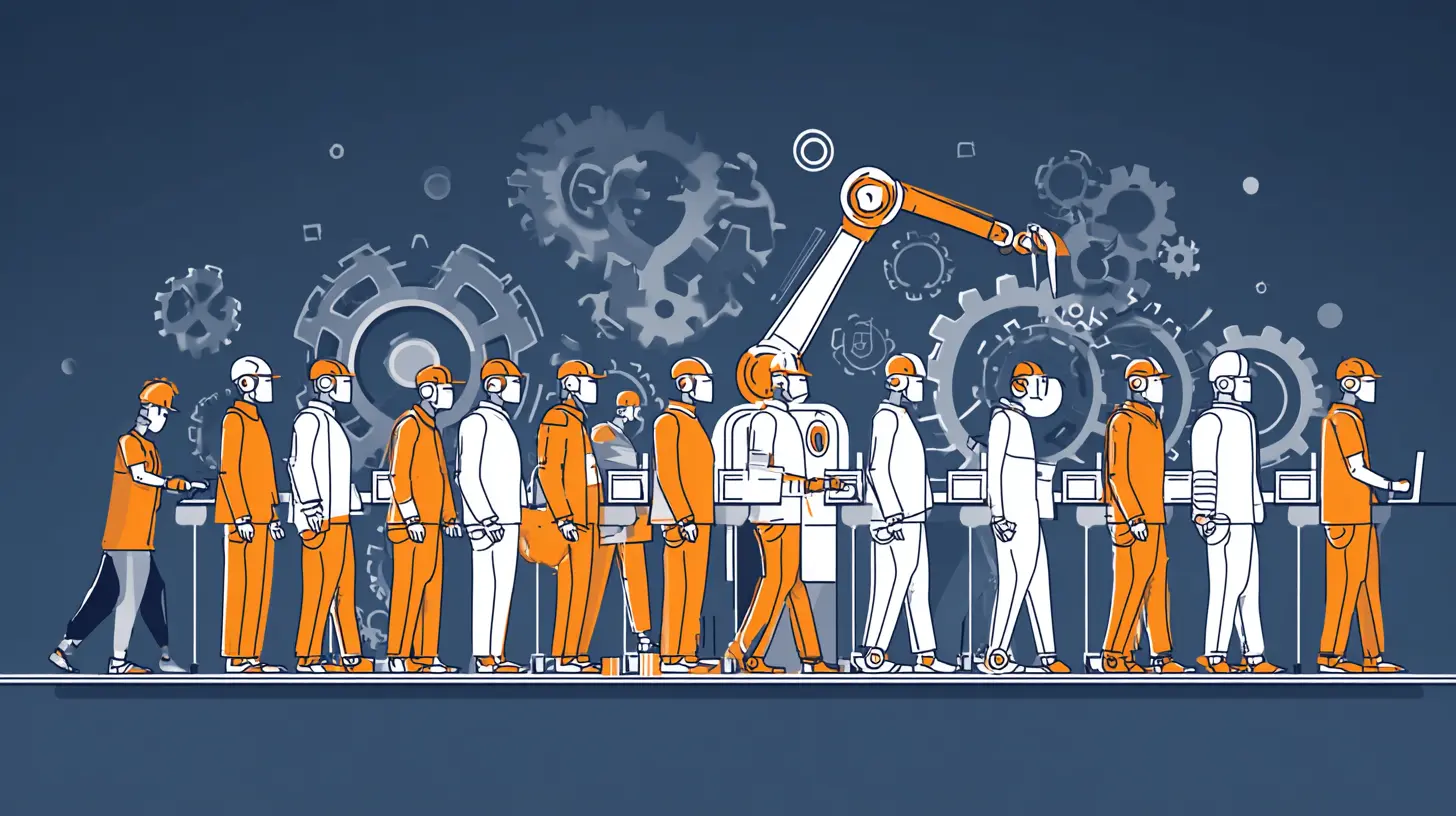
The Real Shift: From Tasks to Outcomes
Most automation discussions get stuck on the wrong question. People ask, "Will this replace jobs?" That is the wrong lens. A better question is, "What tasks disappear, and what new tasks appear?"Automation rarely removes an entire role overnight. It removes specific tasks. A customer service representative who spends 40 percent of their time answering routine questions can have that portion automated. The remaining 60 percent becomes more complex: handling escalations, managing edge cases, and building rapport with frustrated customers. The job title stays the same, but the nature of the work changes.
Workforce planning must therefore shift from counting roles to analyzing tasks. Instead of saying, "We need 50 customer service agents," you say, "We have 10,000 routine inquiries per month. Automation can handle 6,000. That leaves 4,000 complex interactions requiring human judgment. Given an average handle time of 12 minutes, we need 10 agents, not 50."
This task-based approach changes every downstream decision. It changes job descriptions. It changes training programs. It changes performance metrics. And it changes how you evaluate whether automation is actually working.

The Skills That Gain Value
When routine tasks are automated, the value of human work shifts to areas where machines are still weak. Those areas are not mysterious. They are judgment, empathy, creativity, and context.Judgment matters because automation struggles with ambiguous situations. An AI can flag a suspicious transaction, but a human decides whether to freeze an account based on the customer's history and tone. Empathy matters because customers still want to talk to a person when they are upset. Creativity matters because automation can only recombine what it has seen. And context matters because a machine cannot understand that a long-time client is having a bad week and needs a break, not a policy reminder.
This does not mean everyone needs to become a data scientist. It means your workforce planning should identify which roles have high proportions of non-routine tasks and invest in those people. It also means you should look at roles that are currently considered "low skill" and see if they contain hidden judgment. A warehouse worker who spots a damaged pallet and reroutes it is making a judgment call. A nurse's aide who notices a patient is more withdrawn than usual is gathering context. Those skills are not in the job description, but they are the reason automation cannot fully replace these roles.
The Hybrid Role Problem
One of the most difficult challenges in workforce planning is that automation creates hybrid roles faster than organizations can define them. Consider a marketing analyst. In the past, they pulled data, cleaned it, and built reports. Now, an automated dashboard does that. The analyst's new job is to interpret the dashboard, ask better questions, and communicate insights to non-technical stakeholders. That is a hybrid of data skills, business acumen, and communication.But most organizations still have job families that separate "analyst" from "communicator." They hire for one and expect the other. This mismatch leads to frustration and turnover.
The solution is not to create a new job title for every combination. It is to build competency models that focus on capabilities rather than tasks. When you plan for talent, ask what capabilities your automation strategy demands. Do you need people who can explain model outputs to executives? Do you need people who can audit automated decisions for bias? Do you need people who can redesign workflows around the new tools?
These are not technical roles in the traditional sense. They are roles that sit at the intersection of technology and human work. And they are the roles that will be hardest to fill.
Planning for the Transition Period
Automation does not happen all at once. It happens in waves. A company might automate invoice processing this quarter, then move to contract review next year. Each wave has a transition period where people and machines work side by side. This period is where most planning failures occur.The first mistake is assuming the transition is purely technical. It is not. It is behavioral. People will resist using a new system if they do not trust it. They will work around it if it makes their job harder. They will game the metrics if they feel threatened. Workforce planning must include change management as a core activity, not an afterthought.
The second mistake is treating the transition period as temporary. Many organizations assume that once the automation is fully deployed, the workforce will stabilize. That is rarely true. Automation creates a moving target. Once you automate one process, you see opportunities to automate the next. The workforce plan needs to be iterative, reviewed every quarter, not every year.
The third mistake is ignoring the emotional impact. Even if no one loses their job, people feel the anxiety of change. They wonder if they are next. This anxiety is rational. A good workforce plan addresses it honestly. If a role is likely to shrink, say so. If a role will change, describe the change. If you cannot guarantee employment, offer support for reskilling and transition. Silence is worse than bad news.

Reskilling vs. Hiring
When automation changes skill requirements, organizations face a choice: train existing employees or hire new ones. Both options have trade-offs.Reskilling is slower and more expensive in the short term. It requires curriculum design, time away from the job, and a willingness to accept that some employees will not make the leap. But it preserves institutional knowledge, builds loyalty, and protects against the risk of hiring someone who looks good on paper but does not understand your business.
Hiring is faster and brings in fresh perspectives. It also lets you target specific skills that are hard to build internally. But the market for people who can work effectively alongside automation is tight. These people know their value. They command higher salaries. And they are more likely to leave if the work is not interesting.
There is no universal right answer. The decision depends on the speed of change, the depth of your talent pool, and the cost of turnover. A practical approach is to use a simple rule: if the skill is deeply tied to your business context, reskill. If it is a general capability that exists in the market, consider hiring. This rule works because context is hard to learn and expensive to replace.
The Role of Internal Mobility
Automation often eliminates tasks that are repetitive but necessary. This frees up capacity. The best organizations use that capacity to move people into new areas, not to shrink headcount. This requires a deliberate internal mobility program.Internal mobility means more than posting jobs on an internal board. It means managers actively releasing their best people to other departments. It means creating short-term project assignments where employees can try new skills without committing to a permanent move. It means measuring success not just by productivity, but by how many people moved into new roles.
The barrier is almost always managerial. A manager who loses a good employee to another team sees it as a loss. The organization sees it as a win. Workforce planning must align incentives so that developing and releasing talent is rewarded, not punished.
The Data Problem in Workforce Planning
Automation produces a lot of data. It tracks throughput, error rates, cycle times, and costs. Workforce planning should use this data, but it must be careful not to misuse it.The common mistake is treating automation data as a complete picture of human performance. An automated system can tell you that a worker completed 50 orders per hour. It cannot tell you that the worker also trained three new hires, resolved a safety issue, or suggested a process improvement that saved thousands of dollars. If you optimize only for the metrics the automation provides, you will inadvertently devalue the human contributions that matter most.
A better approach is to use automation data for planning, not for performance evaluation. Use it to identify bottlenecks. Use it to predict workload. Use it to decide where to deploy people. But keep a separate system for evaluating human performance, one that includes qualitative factors and peer feedback. Mixing the two leads to gaming and demoralization.
Another data issue is the assumption that past performance predicts future needs. Automation changes the relationship between inputs and outputs. A system that handled 10,000 transactions last year might handle 100,000 this year with the same staffing. If your workforce plan is based on historical ratios, it will be wrong. You need to model the new capacity, not the old one.
Organizational Structure Changes
Automation does not just change individual jobs. It changes how teams are organized. When routine work is automated, the need for layers of management often shrinks. A supervisor who spent time checking work and assigning tasks becomes less necessary because the system does that. This is a difficult truth for many organizations.Flatter structures become possible when automation handles coordination. But flatter structures require more skilled workers. You cannot remove a layer of management if the workers below are not capable of self-direction. The sequence matters. You must invest in worker capability before you remove the supervision layer. Otherwise, you create chaos.
Automation also changes the boundary between departments. When a shared data platform automates reporting, the finance team and the operations team no longer need to reconcile numbers manually. They can focus on analysis and decision-making. This sounds good, but it requires new communication patterns. Workforce planning should include cross-functional training so that people understand the whole workflow, not just their piece of it.
The Contingent Workforce and Automation
Automation makes it easier to scale work up and down. This has a direct impact on the mix of full-time employees and contingent workers.When a process is automated, the variable cost of each unit of work drops. This makes it more attractive to keep a small core team and bring in contractors for spikes. For example, an e-commerce company might automate order processing. During the holiday season, they do not need to hire hundreds of seasonal workers. They need a handful of people to handle exceptions and a larger number of temporary workers to manage customer escalations.
This shift toward a smaller core and a larger flexible ring has implications for workforce planning. You need to identify which roles are truly strategic and which are operational. Strategic roles should be filled by full-time employees who understand the business deeply. Operational roles can be filled by contingent workers, as long as the automation provides enough structure to make onboarding quick.
The risk is over-reliance on contingent workers. They do not accumulate institutional knowledge. They do not build relationships with customers. They do not contribute to long-term improvement. If you push too much work to the contingent layer, you lose the ability to improve your processes. A balanced approach is to keep a stable core that owns the process and a flexible ring that handles volume.
Misconceptions About Automation and Talent
There are several persistent myths that distort workforce planning. The first is that automation always reduces headcount. In some cases, it does. In many cases, it shifts headcount. A bank that automates loan processing might reduce the number of processors but increase the number of loan officers who can handle more complex applications. The total headcount might stay the same, but the skill mix changes.The second myth is that automation only affects low-skill jobs. This is clearly false. Automation affects legal document review, financial analysis, medical imaging, and software testing. Anyone who works with structured data is exposed. Professionals who assume they are safe because they have a degree are not paying attention.
The third myth is that human skills are the answer to everything. Empathy and judgment are valuable, but they are not enough. A worker who is empathetic but cannot use the new software will fail. The future belongs to people who combine human skills with technical literacy. This does not mean everyone needs to code. It means everyone needs to understand how to interact with automated systems, interpret their outputs, and know when to override them.
The fourth myth is that automation is a one-time event. It is not. It is a continuous process. The tools change, the vendors change, the algorithms change. Workforce planning must be built for continuous adaptation, not for a single transition.
Practical Steps for Workforce Planning in an Automated World
Start with a task inventory. List the major tasks in each role. Estimate how much time each task takes and how automatable it is. This gives you a baseline. You do not need perfect data. A rough estimate is enough to start.Next, identify the high-value human tasks. These are tasks that are difficult to automate and that create significant business value. In a sales role, this might be relationship building. In a nursing role, this might be patient education. In a legal role, this might be negotiation. These are the tasks you should protect and develop.
Then, model different automation scenarios. What if you automate 30 percent of routine tasks? What if you automate 60 percent? What is the impact on headcount, skill requirements, and team structure? These scenarios help you prepare for uncertainty. They also help you communicate with executives about the trade-offs.
After that, design the reskilling path. For each role that will change, define what new skills are needed and how employees can acquire them. This is not a one-time training event. It is an ongoing process. Build it into the workflow. Give people time during the workday to learn. Pair them with mentors. Use micro-learning modules that fit into short breaks.
Finally, track outcomes. Measure not just productivity, but also employee engagement, turnover, and internal mobility. If automation is working, you should see an increase in the quality of work, not just the quantity. If you see burnout or resistance, adjust your approach. The plan is a living document, not a fixed one.
The Role of Leadership
Workforce planning in the age of automation is ultimately a leadership issue. It requires honesty about the future, humility about predictions, and a willingness to invest in people before the need is urgent.Leaders who communicate clearly about automation build trust. They say, "We are automating this process. Here is what it means for your role. Here is what we will do to help you adapt." Leaders who hide the truth breed fear and resistance.
Leaders also need to model the behavior they want to see. If you expect employees to learn new skills, you should be learning too. If you expect people to work alongside automation, you should be experimenting with it in your own work. This is not about being a tech expert. It is about being open to change.
The most important leadership task is to define the purpose of automation. Is it to cut costs? Is it to improve quality? Is it to enable growth? The answer shapes everything. If the purpose is cost cutting, workforce planning will focus on reducing headcount. If the purpose is growth, workforce planning will focus on reallocating talent to higher-value work. Both are valid, but they require different strategies. Mixing them up creates confusion and cynicism.
Conclusion
Automation will not make workforce planning easier. It will make it more complex, more dynamic, and more important. The old models based on headcount ratios and annual forecasts are no longer sufficient. The new models must be based on tasks, capabilities, and scenarios. They must be updated continuously. And they must put human development at the center.Organizations that treat automation as a way to reduce costs will get short-term savings and long-term stagnation. Organizations that treat automation as a way to augment human capability will build a workforce that is more skilled, more engaged, and more resilient. The difference is not in the technology. It is in the planning.
all images in this post were generated using AI tools
Category:
Tech For BusinessAuthor:

Reese McQuillan