The Impact of 5G on Augmented Reality and Virtual Reality
13 January 2026
The buzz around 5G has been growing for years—and now, it’s finally here. While some of us might just associate it with faster smartphone downloads, the real magic lies in how 5G is revolutionizing technologies like Augmented Reality (AR) and Virtual Reality (VR). Honestly, what we’re seeing is more than just a speed bump; it’s more like rocket fuel for immersive tech.
So, what exactly does 5G bring to the AR and VR table? Why does it matter so much? And how is it going to change our experiences—whether we're gaming, attending virtual events, performing surgery remotely, or even buying a new couch online?
Let’s break this down and really dig into how 5G is shaping the future of AR and VR.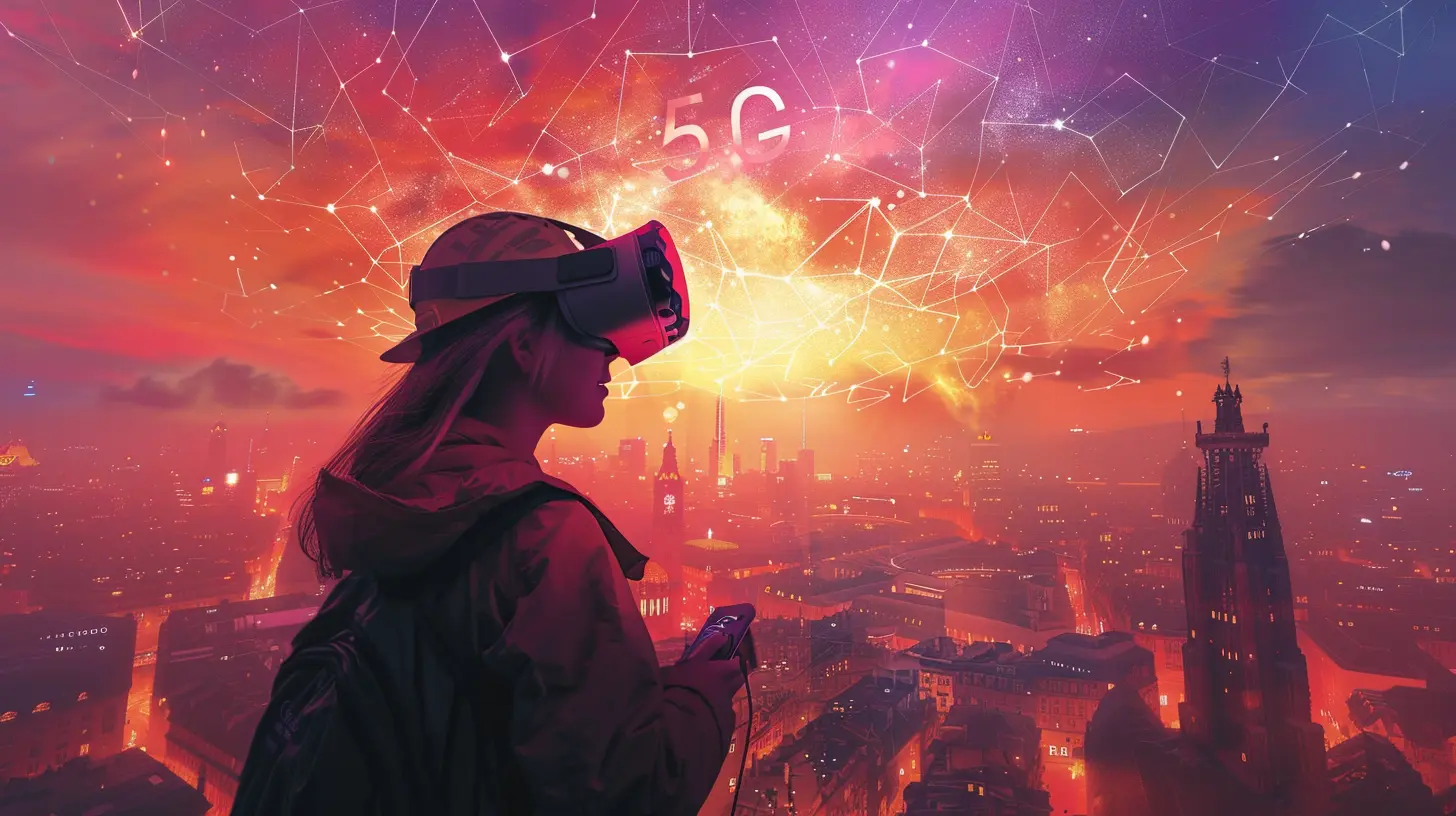
What’s the Big Deal About 5G Anyway?
Alright, before we connect the dots, let’s talk about what 5G actually is.In simple terms, 5G stands for the fifth generation of mobile networks. It’s not just “faster internet” (although, yeah, it’s crazy fast). It’s about ultra-low latency, massive bandwidth, higher capacity, and super reliability.
To put it into perspective:
- Latency on 4G? Around 50 milliseconds.
- Latency on 5G? As low as 1 millisecond.
Yep, that’s faster than your brain reacting to touching something hot.
This lightning-quick response time is what makes all the difference for real-time applications like AR and VR that need data to move in and out almost instantly.
Understanding AR and VR: A Quick Primer
Just to make sure we’re on the same page:- Augmented Reality (AR) overlays digital content onto the real world. Think Pokemon GO, Snapchat filters, or using your phone to see how that IKEA sofa fits in your living room.
- Virtual Reality (VR) immerses you in a completely digital environment. You put on a headset and—boom—you’re in another world, whether it’s a game, a concert, or a virtual office space.
Both are amazing on their own, but each has its bottlenecks—mainly due to connectivity limitations. That’s where 5G steps in like a superhero.
Why 5G is a Game-Changer for AR/VR
Here’s the juicy part: let’s break down exactly how 5G elevates AR and VR.1. Low Latency Means Instant Experiences
Imagine trying to sword fight a dragon in VR—but there’s a lag every time you swing your weapon. Kills the vibe, right? That’s what happens with high latency.5G’s ultra-low latency means near-instant interaction. Whether it’s a fast-paced VR game or an AR app guiding surgeons in real time, there's no noticeable delay. Everything just flows.
2. Massive Bandwidth = Richer Graphics
You know how some VR games look kind of…meh? That’s often because devices and networks can’t handle complex, high-res environments.With 5G, we get far more data capacity, allowing for high-resolution, photorealistic graphics to stream to your headset or phone effortlessly. That means beefier visuals without the need for expensive hardware.
3. Edge Computing Becomes More Powerful
5G supports edge computing, where data processing is done closer to the user. Translation? Your device doesn’t have to work as hard or get hot like a toaster.Offloading heavy compute tasks to edge servers reduces the load on devices, making AR glasses lighter, VR headsets cheaper, and experiences smoother.
4. Seamless Mobility
You're walking down the street, glasses on, and relying on AR to navigate, check messages, or translate signs.In a 4G world? Prepare for lags and hiccups as you move between towers.
In a 5G world? Your connection is solid and seamless. Whether you're stationary or on the move, AR works like a charm.
Real-World Applications of 5G-Powered AR/VR
So, how’s 5G changing things in the real world? Let’s talk use cases that are already happening—or just around the corner.1. Gaming That Feels Real
Say goodbye to motion sickness and buffering! Cloud VR gaming is booming. With 5G, games can be streamed instead of downloaded. So, players can enjoy high-end titles on cheaper headsets without sacrificing quality.Imagine playing Call of Duty in VR with friends across the globe, zero lag, and visuals so crisp it feels like real combat. That’s not sci-fi anymore.
2. Virtual Workspaces
Remote work is here to stay, but Zoom fatigue is real. 5G + VR ushers in immersive virtual offices—where team meetings happen in 3D environments, complete with virtual whiteboards, avatars, and spatial audio.Think of it like teleporting into a conference room instead of clicking a boring meeting link.
3. Healthcare and Remote Surgery
AR and VR are already being used in medical training. Add 5G, and we’re talking live remote surgeries, with AR overlays guiding surgeons in real time without delays.It’s like having a digital guardian angel with you in the OR.
4. Education That Transports You
Why just read about the pyramids when you can explore them in 3D? 5G allows VR classrooms to transport students across continents—or even back in time.Learning becomes an experience, not just information.
5. Retail and E-Commerce
Trying on clothes, makeup, or furniture via AR is already popular. But 5G makes it smooth, realistic, and personalized.Imagine walking into a virtual store, “picking up” products, or seeing how shoes look on your feet—all without leaving your couch.
Overcoming Current AR/VR Limitations with 5G
Right now, AR and VR adoption is still a bit niche. Why? Because of limitations like:- Device costs
- Battery life
- Bulky headsets
- Lag and latency
5G doesn’t solve everything, but it removes some of the biggest tech hurdles:
- Devices don't need as much processing power (thanks, edge computing).
- Graphics can be rendered remotely and streamed.
- Lags practically disappear.
This opens the door for lighter, cheaper, and more user-friendly AR/VR hardware.
The Future Is Mixed Reality—and It's 5G-Driven
Mixed Reality (MR) is like the love child of AR and VR. You see and interact with both real and digital elements seamlessly. It's still early days, but 5G is the rocket fuel MR needs.Imagine architectural teams walking through a virtual building before it’s built. Or mechanics fixing cars with virtual instructions floating in front of them.
With 5G at the core, MR could become the new standard in work, entertainment, and education.
Challenges Still on the Horizon
Let’s not sugarcoat it—5G and AR/VR still face a few hurdles:- Network rollout: 5G is still expanding. Rural areas might take longer to benefit.
- Device compatibility: Not all current headsets or phones support 5G yet.
- Costs: Advanced devices and network plans aren’t cheap—yet.
But like with all tech, early adoption comes first, and then the costs go down. Look at what happened with smartphones, right?
Wrapping It Up: The 5G-AR/VR Revolution
So, here’s the bottom line—5G isn’t just a big deal for phone geeks and speed freaks. It’s changing the entire game for AR and VR. It’s making interactions faster, graphics richer, devices lighter, and experiences more immersive.Whether it’s gaming, education, healthcare, or shopping, the 5G-enabled future looks like something out of a sci-fi flick—only this time, it’s real.
We’re on the edge of a massive transformation. And thanks to 5G, AR and VR are finally ready to step out of the lab and into our daily lives.
Buckle up—it’s going to be wild.
all images in this post were generated using AI tools
Category:
5g TechnologyAuthor:

Reese McQuillan
Discussion
rate this article
2 comments
Quinn Hall
5G technology significantly enhances AR and VR experiences by reducing latency and increasing bandwidth, enabling seamless interactions and richer content delivery, thus unlocking new possibilities for immersive applications in various industries.
January 31, 2026 at 4:25 AM
Reese McQuillan
Thank you for highlighting the crucial role of 5G in enhancing AR and VR experiences! Its ability to reduce latency and increase bandwidth truly paves the way for more immersive and interactive applications across industries.
Wyatt Warren
Exciting possibilities ahead! I wonder how 5G will truly reshape AR and VR experiences.
January 13, 2026 at 1:20 PM
Reese McQuillan
Absolutely! 5G's high speed and low latency will enhance AR and VR by enabling seamless, immersive experiences and real-time interactions, opening up new avenues for applications in entertainment, education, and more.