New Memory Tech Promises Devices That Run Months Between Charges
May 9, 2026 - 05:18

A team of researchers has developed a tiny memory device that actually works better as it shrinks, overturning a long-standing barrier in electronics design. The breakthrough could eventually let smartphones, laptops, and wearables run for months on a single charge.
Conventional memory chips lose performance and efficiency when scaled down to the smallest sizes. This new technology, based on a novel material structure, does the opposite. As the device gets smaller, its energy consumption drops and its speed increases. That is a reversal of the usual trade-off where miniaturization comes at the cost of higher power draw.
The researchers built the memory using a thin film of a special oxide material that switches between resistive states to store data. Unlike standard flash memory, which requires a constant trickle of power to retain information, this design holds data without any electricity. That alone cuts standby power use nearly to zero.
In tests, the prototype consumed roughly one-hundredth the energy of existing memory chips while operating faster. The team says the approach is compatible with current semiconductor manufacturing, meaning it could be scaled up for commercial production without expensive retooling.
If adopted widely, the impact on battery life would be dramatic. A phone that now lasts a day could stretch to weeks. A smartwatch that needs nightly charging could go for months. The technology also generates less heat, which could allow thinner devices without cooling fans.
The work was published in a peer-reviewed journal and has drawn interest from several chipmakers. The researchers caution that commercial products are still years away, but they are confident the fundamental physics works. For now, the prototype proves that shrinking a memory chip does not have to mean sacrificing efficiency.
MORE NEWS

August 9, 2026 - 00:24
‘AI slop’ crackdown: LinkedIn, Snap target low-quality gen-AI contentSocial platforms are starting to push back against the flood of generic, machine-generated posts, but they are doing so carefully. LinkedIn and Snap have both announced new measures aimed at...

August 8, 2026 - 05:47
Why GigaCloud Technology (GCT) Is Up 21.7% After Strong Q2 Results And New Buyback PlanGigaCloud Technology saw its stock surge 21.7% in early trading following the release of its second-quarter financial results and the announcement of a new capital return program. The company...
August 7, 2026 - 22:40
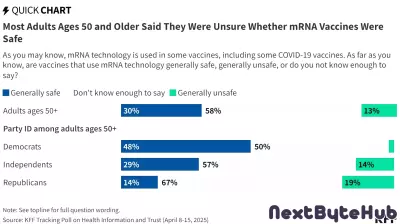
As FDA Approves First-Ever mRNA Flu Vaccine For Older Adults, Past KFF Polling Showed Most In This Age Group Were Uncertain About the Technology’s SafetyOn August 5, 2026, the U.S. Food and Drug Administration gave the green light to the first messenger RNA flu vaccine for adults aged 50 and older. The decision came after a clinical trial involving...

August 7, 2026 - 10:27
'Preparing learners to adapt': What Nebraska parents can expect around AI technology in schoolsThe Nebraska Department of Education held a workshop on Thursday to brief the state board on a new set of recommendations for using artificial intelligence in classrooms. The guidance is not a...