New Technology Unlocks Answers for Maryland Family Battling Hidden Seizures
June 8, 2026 - 23:00

For years, a Maryland family watched their child suffer through mysterious episodes that doctors could not explain. The seizures were invisible to standard medical tests, leaving parents frustrated and terrified. Their child would suddenly stare into space, lose focus, or appear confused, but routine EEGs showed nothing unusual. Specialists offered few answers, and the family felt trapped in a cycle of uncertainty.
Then a breakthrough came in the form of wearable technology. A compact device, worn like a headband, continuously monitored brain activity over days instead of the typical short hospital sessions. This new system captured data during everyday life, including sleep and play. Within weeks, the recordings revealed subtle electrical patterns that matched the child's episodes. Doctors finally diagnosed a rare form of focal epilepsy that had been hiding in plain sight.
The technology uses small sensors and wireless transmission to track brain waves in real time. Parents can now see when a seizure begins, even if the child shows no outward signs. Medication adjustments became precise, and the frequency of episodes dropped sharply. The family described the relief as overwhelming, saying they finally had a roadmap for treatment.
This case highlights a growing shift in epilepsy care. Traditional EEGs often miss seizures that happen outside a clinic. But long-term monitoring at home is changing that. For this Maryland family, the device did not just provide data. It gave them hope and a future they thought they had lost.
MORE NEWS

August 9, 2026 - 00:24
‘AI slop’ crackdown: LinkedIn, Snap target low-quality gen-AI contentSocial platforms are starting to push back against the flood of generic, machine-generated posts, but they are doing so carefully. LinkedIn and Snap have both announced new measures aimed at...

August 8, 2026 - 05:47
Why GigaCloud Technology (GCT) Is Up 21.7% After Strong Q2 Results And New Buyback PlanGigaCloud Technology saw its stock surge 21.7% in early trading following the release of its second-quarter financial results and the announcement of a new capital return program. The company...
August 7, 2026 - 22:40
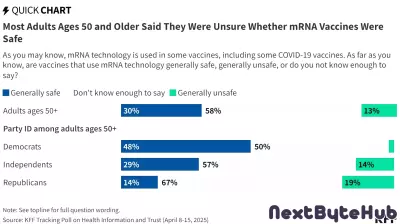
As FDA Approves First-Ever mRNA Flu Vaccine For Older Adults, Past KFF Polling Showed Most In This Age Group Were Uncertain About the Technology’s SafetyOn August 5, 2026, the U.S. Food and Drug Administration gave the green light to the first messenger RNA flu vaccine for adults aged 50 and older. The decision came after a clinical trial involving...

August 7, 2026 - 10:27
'Preparing learners to adapt': What Nebraska parents can expect around AI technology in schoolsThe Nebraska Department of Education held a workshop on Thursday to brief the state board on a new set of recommendations for using artificial intelligence in classrooms. The guidance is not a...