Quantum vibronics research points to future energy and computing technologies
May 29, 2026 - 02:18

Researchers at the University of California, Riverside have unlocked new insights into how quantum wave functions travel through ultra-thin materials, a discovery that may shape the next generation of energy and computing systems. The work focuses on a field called quantum vibronics, which examines how vibrations at the atomic scale interact with electrons and other quantum particles.
In experiments with two-dimensional materials-sheets just a few atoms thick-the team observed that these vibrations, known as phonons, can carry quantum information across distances without losing coherence. This behavior is critical for developing devices that rely on quantum states, such as advanced solar cells or quantum computers. Unlike traditional electronics, which lose energy as heat, quantum vibronics could allow for near-lossless energy transfer.
The researchers used specialized lasers to excite phonons in materials like graphene and molybdenum disulfide, tracking how the vibrations spread. They found that the quantum wave functions of electrons paired with these phonons remained stable over longer paths than previously thought. This stability is a key hurdle for practical quantum technologies.
While commercial applications are still years away, the findings suggest a path toward more efficient energy harvesting, where solar panels could capture light without wasting energy as heat. In computing, the work hints at processors that use phonons to shuttle data, reducing power consumption. The study was published in a peer-reviewed journal, marking a step forward in understanding how quantum mechanics works in real-world materials.
MORE NEWS

August 9, 2026 - 00:24
‘AI slop’ crackdown: LinkedIn, Snap target low-quality gen-AI contentSocial platforms are starting to push back against the flood of generic, machine-generated posts, but they are doing so carefully. LinkedIn and Snap have both announced new measures aimed at...

August 8, 2026 - 05:47
Why GigaCloud Technology (GCT) Is Up 21.7% After Strong Q2 Results And New Buyback PlanGigaCloud Technology saw its stock surge 21.7% in early trading following the release of its second-quarter financial results and the announcement of a new capital return program. The company...
August 7, 2026 - 22:40
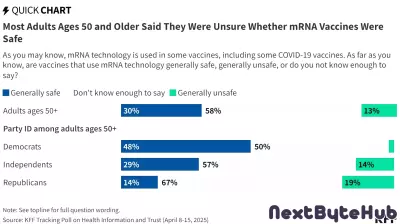
As FDA Approves First-Ever mRNA Flu Vaccine For Older Adults, Past KFF Polling Showed Most In This Age Group Were Uncertain About the Technology’s SafetyOn August 5, 2026, the U.S. Food and Drug Administration gave the green light to the first messenger RNA flu vaccine for adults aged 50 and older. The decision came after a clinical trial involving...

August 7, 2026 - 10:27
'Preparing learners to adapt': What Nebraska parents can expect around AI technology in schoolsThe Nebraska Department of Education held a workshop on Thursday to brief the state board on a new set of recommendations for using artificial intelligence in classrooms. The guidance is not a...