Rare Disease Day: Revolutionising clinical trial enrolment and retention with technology
February 28, 2026 - 04:58
On Rare Disease Day, the focus sharpens on the unique challenges of developing treatments for conditions affecting small, often geographically dispersed patient populations. A key industry expert emphasizes that technological innovation is now revolutionizing the very backbone of this research: patient enrolment and retention.
The traditional model for clinical trials is frequently ill-suited for rare diseases, where finding and keeping participants can be a monumental task. Advanced technologies are creating new pathways. Digital tools and decentralized trial models allow for remote monitoring and data collection, significantly reducing the burden on patients and their families who might otherwise face impossible travel demands. Wearable devices and mobile health platforms enable the continuous capture of real-world data, providing a richer, more accurate picture of a therapy's effect in a patient's daily life.
Furthermore, sophisticated data analytics and artificial intelligence are helping to identify potential participants more efficiently by analyzing genetic databases and electronic health records. This targeted approach accelerates enrolment. By making trials more patient-centric and accessible, technology is not just improving operational efficiency; it is actively breaking down barriers, offering new hope for accelerating the delivery of vital therapies to those who need them most.
MORE NEWS

August 9, 2026 - 00:24
‘AI slop’ crackdown: LinkedIn, Snap target low-quality gen-AI contentSocial platforms are starting to push back against the flood of generic, machine-generated posts, but they are doing so carefully. LinkedIn and Snap have both announced new measures aimed at...

August 8, 2026 - 05:47
Why GigaCloud Technology (GCT) Is Up 21.7% After Strong Q2 Results And New Buyback PlanGigaCloud Technology saw its stock surge 21.7% in early trading following the release of its second-quarter financial results and the announcement of a new capital return program. The company...
August 7, 2026 - 22:40
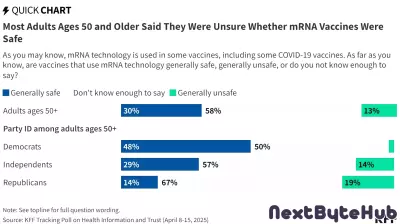
As FDA Approves First-Ever mRNA Flu Vaccine For Older Adults, Past KFF Polling Showed Most In This Age Group Were Uncertain About the Technology’s SafetyOn August 5, 2026, the U.S. Food and Drug Administration gave the green light to the first messenger RNA flu vaccine for adults aged 50 and older. The decision came after a clinical trial involving...

August 7, 2026 - 10:27
'Preparing learners to adapt': What Nebraska parents can expect around AI technology in schoolsThe Nebraska Department of Education held a workshop on Thursday to brief the state board on a new set of recommendations for using artificial intelligence in classrooms. The guidance is not a...